
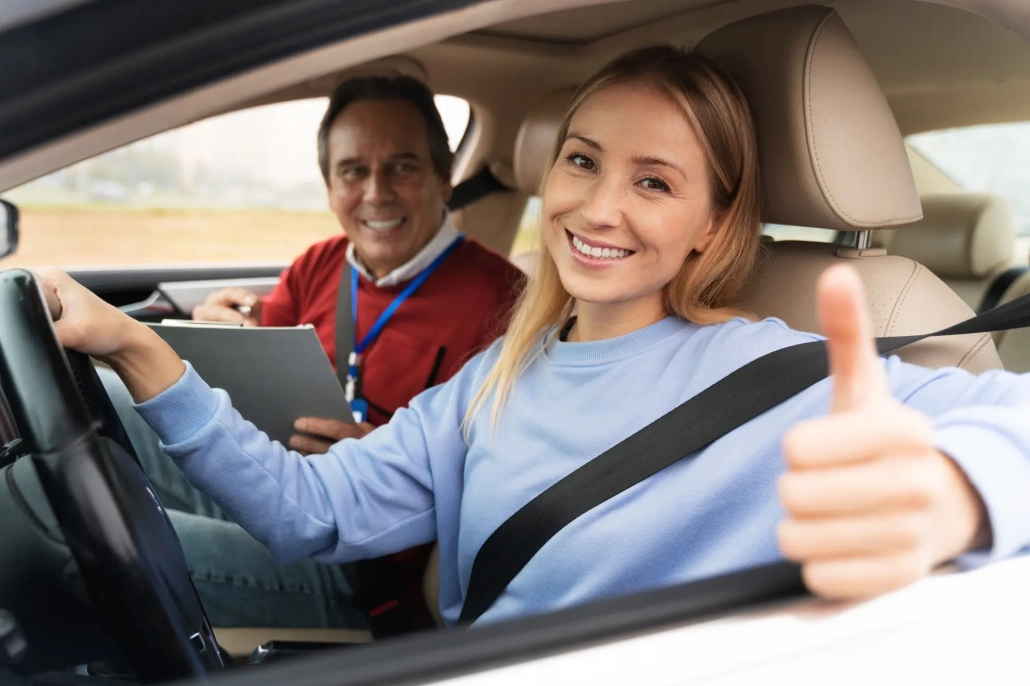
Teen Driving Lessons in Santa Clara: Complete Parent and Teen Training Checklist
Let’s be honest: the day you hand your car keys to your teenager is one of the most terrifying moments of parenthood.
We’ve been in the driving education industry for over 20 years, and we’ve seen that look on every parent’s face. It’s a messy cocktail of pride (“Look at them, they’re growing up!”) and sheer, unadulterated panic (“They’re about to pilot a 3,000 pound metal missile!”).
If you live here in Santa Clara, that panic is entirely justified. We aren’t driving in a sleepy Midwestern town. Between the rush hour crush on Lawrence Expressway, the confusing construction zones that pop up overnight, and the aggressive merging required on the 101, learning to drive in the Bay Area is a trial by fire.
But here’s the good news, you don’t have to do it alone. At AAA Car Driving School, we’ve helped thousands of families to navigate this milestone without losing their cool (or their insurance premiums).
To help you through the process, here’s the checklist. This isn’t just the dry DMV requirements, it’s the real world, “We’ve seen it all” guide to turning your nervous teen into a confident, safe driver on our local roads.
Phase 1: The Legal Must Haves (Boring but Critical Stuff)
Before we even get to the fun part (driving), California has some strict rules. The Graduated Driver Licensing (GDL) program isn’t just bureaucratic red tape, it’s actually designed to keep kids safe by introducing risk gradually.
- The Permit: Your teen needs to be at least 15½ years old. They have to pass the written knowledge test at the DMV.
Pro tip: The Santa Clara DMV on Flora Vista Ave usually has a line wrapping around the building. Make an appointment, or bring a very comfortable folding chair.
- Professional Training: You are required to sign them up for 6 hours of professional behind the wheel training with a licensed instructor. You literally cannot validate their permit until the instructor signs it. (That’s where we come in)
- The Practice Hours: This is the big one. You, the parent, need to log 50 hours of supervised driving, 10 of which must be at night.
- The Wait: They must hold their permit for at least 6 months before taking the road test. Use this time wisely.
Phase 2: The Parking Lot Stage (0 to 5 Hours)
Goal: Learning the car without hitting anything.
Do not, I repeat, do not take your teen onto El Camino Real for their first drive. You want a wide and open space where mistakes are harmless.
- The Setup: Spend 20 minutes just sitting in the driveway. Adjust the mirrors, the seat, and the steering wheel. Explain what every button does before the car is moving. If they ask where the hazard lights are while doing 40mph, it’s too late.
- The Creep: Practice letting go of the brake and letting the car roll forward without touching the gas. It teaches them how powerful the engine idle is.
- Steering: Do figure eights. Explain “hand over hand” steering. They will want to shuffle the wheel but don’t let them.
- Braking: Have them accelerate to 10 mph and brake smoothly to a stop at a specific line. New drivers treat the brake pedal like an on/off switch, teach them it’s a dimmer switch.
- Santa Clara Local Tip: The industrial parks near Great America or the tech campuses off Tasman Drive are often ghost towns on Sunday mornings. They are perfect for this stage. No traffic, huge lanes, and zero pressure.
Phase 3: Quiet Neighborhoods (5 to 15 Hours)
Goal: Signs, signals, and scanning.
Once they aren’t jerking the wheel or slamming the brakes, move to a quiet residential area.
- The Rolling Stop Trap: This is the #1 reason teens fail their test. Teach them to feel the kickback of the car when it fully stops. If the nose doesn’t dip and settle, they don’t stop. Count to three: “One Mississippi, Two Mississippi…”
- Scanning: Teach them the Left-Right-Left scan before entering any intersection. New drivers get tunnel vision, they stare at the bumper in front of them. You need to train their eyes to move.
- Lane Position: New drivers tend to hug the right side because they are scared of oncoming traffic on the left. Help them center the car. Pick a reference point on the hood to line up with the road.
- Turn Signals: Make it muscle memory. Signal 100 feet before the turn, not during the turn.
Phase 4: Real Traffic & The 101 (15 to 40 Hours)
Goal: Speed management and merging.
This is where the gray hairs start for parents. But if you’ve done the first two phases patiently, they are ready.
- Lawrence Expressway & San Tomas: These are essentially highways with traffic lights. They are great for practicing higher speeds (45 to 50 mph) while still dealing with intersections. Watch out for the long yellow lights, teens often struggle with the “should I stop or go?” decision here.
- Merging: This is terrifying for teens. They need to learn to get up to speed on the ramp, not after they merge. If traffic is doing 65, they need to be doing 65 by the time they reach the merge point.
- Lane Changes: Teach the acronym SMOG: Signal, Mirror, Over the shoulder, G That “Over the shoulder” check is non-negotiable.
- Defensive Driving: Drive down a busy street and ask them, “What is that driver on the right doing?” Train them to predict bad behavior. If they see a car drifting in its lane, teach them to back off.
Phase 5: The “Polish” & Night Driving (40 to 50 Hours)
Goal: Independence.
- Night Driving: Everything looks different at night. Depth perception is worse, and glare is real. Do they already know your 10 required hours on routes
- Parking: Parallel parking is on the test, but backing into a stall is a life skill. Go to a busy grocery store parking lot (maybe avoid Costco on a Saturday though) and practice parking between lines.
- Mock Test: Pretend you are the DMV examiner. Sit in the passenger seat with a clipboard. Give directions (Turn left at the next light) and grade them silently. No coaching allowed!
Why Parents in Santa Clara Choose AAA Car Driving School
Look, checking off those 50 hours is hard work. It strains the parent and teen relationship. Sometimes, teenagers just listen better to a professional than they do to Mom or Dad. When you say “Slow down,” it’s nagging. When we say it, it’s instruction.
That’s why our Teen 6 Hours Behind the Wheel Program is so popular.
- We Come to You: We pick up and drop off at your home, school, or work. You’re busy and we get it.
- Safety First: Our cars aren’t just regular sedans. They are equipped with dual controls, blind spot detection, and lane assist. We can stop the car if your teen makes a mistake. You can’t do that from the passenger seat of your minivan.
- Confidence, Not Fear: Our philosophy is 100 percent confidence build-up. We don’t yell. We don’t panic. We are patient, friendly, and DMV licensed (License #E0609).
- The Gap Strategy: We often recommend spacing the lessons out. Lesson 1 gets them started. You practice for a month. Lesson 2 corrects the bad habits they picked up. Lesson 3 preps them for the test.
The Parent and Teen Contract
Before you start, sign a contract. It sounds formal, but it sets the ground rules so you aren’t arguing at 40mph.
- No Cell Phones: Period. Not even for maps. Put it in the glovebox.
- Passenger Limit: California law says no passengers under 20 for the first 12 months (unless a parent is there). Enforce this. Peer pressure is the biggest distraction.
- Curfew: No driving between 11 PM and 5 AM for the first year.
Learning to drive is a journey, not a race. If you need help getting started, or if you want a professional to handle the scary parts like freeway merging, give us a call at AAA Car Driving School. Let’s get your teen on the road, safe and sound.
